

Capacity-building Programme on Localization 2030 Agenda
Description
The Local2030 Coalition is the United Nations (UN) System-wide platform to accelerate the localization of the 2030 Agenda for Sustainable Development. With 14 UN entities advancing the Coalition’s on-the-ground delivery and five constituencies (national and local governments, civil society and academia, private sector, and youth) actively participating, the Coalition creates a point of convergence between the UN system and local development stakeholders. It is acknowledged as a key accelerator for the implementation of the 2030 Agenda as one of the twelve SDG High Impact Initiatives.
At the local level, the Local2030 Coalition in Bilbao works very closely and collaboratively with the Basque Government’s Directorate for Social Innovation and Agenda 2030 and with the University of the Basque Country / Euskal Herriko Unibertsitatea (EHU), both exemplary and key partners for advancing the localization of the 2030 Agenda for Sustainable Development.
With the 2027 SDG Summit coming up as the next key milestone towards 2030, the Coalition is enabling connections to:
- Better integrate local development stakeholders as key enablers for global agendas, promoting existing solutions and building strategic alliances.
- Build capacities in the UN system and beyond to operationalize localization.
- Scale up development and financing solutions to enhance local impact and to accelerate the implementation of the 2030 Agenda.
- Enhance data collection and analysis alongside multi-stakeholder dialogues to review sustainable development progress and promote evidence, stories, and champions.
This microcredential focuses on the second point mentioned above, namely the support provided by the Local2030 Coalition for capacity building through the “Bilbao Offer.” This initiative consists of a comprehensive, multi-level and multi-stakeholder capacity-building package that includes a global Training of Trainers (ToT); country-level training for UN entities, national governments, local and regional governments, civil society organizations, academia, and the private sector; as well as mentoring and technical support delivered at the local level by both UN and non-UN practitioners.
This proposal builds on the experience of a training programme of this nature designed and delivered by the University of the Basque Country / Euskal Herriko Unibertsitatea (EHU) in collaboration with the Directorate for Social Innovation of the Basque Government during the 2022/23 academic year. The programme, offered as a university specialist diploma entitled “Integración Estratégica, Seguimiento y Comunicación de la Agenda 2030 y ODS” -coordinated by Dr. Estibaliz Saez de Camara Oleaga- enabled the acquisition of the expertise necessary to scale this initiative from the local and regional level to the international level. In doing so, it positioned Euskadi as a reference in the localization of the 2030 Agenda and opened opportunities for collaboration with other regions, while providing valuable learning opportunities for individuals and organizations from Euskadi who enroll in this microcredential. The programme will remain open to participants from different regions and backgrounds interested in advancing the localization of the 2030 Agenda.
The development and coordination of the Bilbao Offer will be carried out by the University of the Basque Country (EHU), the Directorate for Social Innovation and Agenda 2030 of the Basque Government, and the Local2030 Secretariat based in Bilbao, in close coordination with the Local2030 Coalition Capacity Building Task Force. The Task Force, co-led by the Local2030 Secretariat, UN DESA, and DCO, will identify key gaps and opportunities to bring together actors working on localization capacity building across the UN system; harmonize efforts to ensure coordination and alignment; and leverage expertise, knowledge, and practical examples to deliver the most actionable capacity-building offers.
Objectives
The objectives of this microcredential framed within the programme Training of Trainers (ToT) are:
- Equip trainers with the knowledge and skills to apply the Bilbao Blueprint as a systems thinking and strategic foresight tool to guide investments toward impactful, place-based SDG outcomes.
- Promote the development of local multi-stakeholder ecosystems that support inclusive economic and social development, the provision of quality public and basic services, and climate action through a territorial approach.
- Strengthen participants’ capacity to identify and activate key levers of territorial transformation, building on local realities and solutions aligned with the Sustainable Development Goals (SDGs).
- Foster peer learning, knowledge exchange, and international as well as inter-territorial collaboration among trainers and participating institutions.
Learning outcomes and type of achievement
The expected Learning Outcomes por the particpantes of this microcredential are,
-
Apply the Bilbao Blueprint as a systems thinking and strategic foresight tool to design and guide investments toward impactful, place-based SDG outcomes.
-
Develop and support local multi-stakeholder ecosystems that advance inclusive economic and social development, ensure the provision of quality public and basic services, and promote climate action through a territorial approach.
-
Identify and activate key levers of territorial transformation, leveraging local realities and designing solutions aligned with the Sustainable Development Goals (SDGs).
-
Engage in peer learning, knowledge exchange, and collaborative practices across international and inter-territorial contexts among trainers and participating institutions.
Access prerequisites and admission criteria
Priority for admission to this microcredential will be given to candidates who demonstrate the potential to apply the knowledge and skills acquired through the programme. In particular, it is aimed at individuals with responsibilities in strategic decision-making and at those overseeing the implementation of SDG localization projects within local and regional governments or in companies providing support to public administrations. Nonetheless, the microcredential remains open to other relevant and related profiles.
Baldintzatutako adina: 25 eta 64 urte (jardueraren epean).
Level of learning experience according to EQF European Qualifications Framework
EQF 7
Master’s degree or long-cycle degree
MECES Level 3
ESCO, European Skills, Competences, Qualifications and Occupations competency frameworks
Reasoning skills and competences: Skills and competences related to the ability to apply mental processes to gather, conceptualize, analyze, synthesize, or evaluate information obtained or generated through observation, experience, reflection, reasoning, or communication. This includes the capacity to assess and use information of different types in order to plan activities, achieve objectives, solve problems, manage specific issues, and carry out complex tasks in a routine or innovative manner.
Social and communication skills and competences: Skills and competences related to the ability to interact with others in a positive and productive way. This is demonstrated through the effective and empathetic communication of ideas, coordinating one’s own objectives and actions with those of others, acting in structured ways according to values, safeguarding the well-being and progress of others, and providing leadership.
Evaluation tests
- Practical evaluations: 1. Projects
- Online evaluations: 4. Discussion forums
- Thought-evaluations: 1. Written Reflections
Activity directed to
- Professionals
- Administración
Organised by


In collaboration with

Directors
Estíbaliz Sáez de Cámara Oleaga
Universidad del Pais Vasco/Euskal Herriko Unibertsitatea (UPV/EHU)
PhD in Environmental Engineering and professor in the ‘Environmental Technologies’ area in the Department of Chemical Engineering of the Environment at Bilbao Engineering School (UPV/EHU). From 2017 to 2025 she was the Director of Sustainability and Social Commitment at the UPV / EHU. She is a member of the Academic Committee of the Master Circular Economy: Business Aplication. Furthermore, she is the president of the Spanish Network for Sustainable Development (REDS). Currently, she is Deputy Director of Quality, Sustainability, and Dual Education at Bilbao Engineering School (UPV/EHU)
Speakers
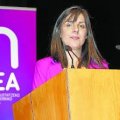
Arantza Acha De la Presa
Licenciada en Biología por la Universidad del País Vasco y tiene un Máster en Conservación y Desarrollo Rural por la Universidad de Kent (Reino Unido). Ha trabajado durante 7 años con la Unidad de Ciencias Ambientales de la Oficina de la Unesco en Indonesia, dos años como beneficiaria del programa de becas de Unesco Etxea y Gobierno Vasco y posteriormente como consultora. Su trabajo se centró en promover el desarrollo sostenible en Indonesia, Timor Oriental, Filipinas y Vietnam. Desde el año 2014 es la directora de Unesco Etxea, el Centro Unesco del País Vasco.
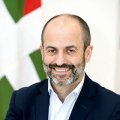
Asier Aranbarri Urzelai
Gobierno Vasco
Asier Aranbarri Urzelai is Director of Social Innovation and the 2030 Agenda at the Basque Government’s Presidency, and a lecturer in International Relations at the University of Deusto. He holds a Law degree and a Master’s in Political Integration and Economic Union in the EU from the University of the Basque Country (EHU-UPV), and has built a solid career in public policy, governance, and international institutional affairs. Throughout his professional trajectory, he has held various positions of responsibility within the Basque Government, including advisor on Public Governance and Self-Government, as well as in External Action and the General Secretariat for Social Transition and the 2030 Agenda. From 2003 to 2011, he served as Mayor of Azkoitia, an experience that reinforced his commitment to innovation and social transformation from the local level.

Marta Ares Godoy
Marta Ares Godoy es actualmente la directora de la Red Española para el Desarrollo Sostenible, antena de la red global SDSN auspiciada por NNUU. Cursó estudios de Cooperación Internacional por el Instituto Hegoa de la UPV/EHU y cuenta con una maestría en Políticas Públicas por FLACSO-Argentina. Su trayectoria profesional incluye las políticas sociales, la cooperación internacional y el desarrollo sostenible, campos en los que ha trabajado desde diferentes organizaciones e instituciones públicas, privadas y sociales. Inició su carrera como técnica de proyectos sociales en su barrio de Otxarkoaga, en Bilbao, y más adelante desempeñó funciones como responsable de programas de cooperación internacional en América Latina. Fue la primera directora de Elankidetza, la Agencia Vasca de Cooperación para el Desarrollo, creada en su gestión. Posteriormente, profundizó su conocimiento y experiencia como responsable de desarrollo sostenible en diversas fundaciones. Tras la pandemia, se incorporó al Instituto de Salud Global de Barcelona (ISGlobal) en el departamento de traslación y análisis. Etapa en la que comienza a colaborar con REDS, impulsando procesos participativos para integrar los ODS en las políticas públicas.

Anaclaudia Rossbach
Economista con más de 20 años de experiencia, se ha especializado en urbanismo y políticas de vivienda social. Ha trabajado en desarrollo urbano sostenible y mejoramiento de asentamientos precarios a nivel internacional. En São Paulo, lideró innovaciones en vivienda y apoyó al Ministerio de las Ciudades de Brasil. Fue consultora del Banco Mundial por una década, participó en Habitat III y contribuyó a la Nueva Agenda Urbana. Antes de asumir como Directora Ejecutiva de ONU-Habitat, fue Directora para América Latina y el Caribe del Instituto Lincoln de Política de Suelo.
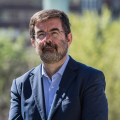
ROBERTO SAN SALVADOR DEL VALLE DOISTUA Academic Training • PhD in Philosophy and Educational Sciences. • MA in Leisure Studies (Leeds University-University of Deusto). • BA in History and Geography. • Diploma in Archeology. Professional and Teaching Career • Professor of the School of Social and Human Sciences. • Director of Deusto Cities Lab Chair. University of Deusto. • Member of the ¬¬¬¬¬¬¬¬¬¬¬¬¬¬¬¬¬¬Leisure and Human Development Research Team (an official recognized research team by Basque Government) • Former Director of the Institute of Leisure Studies (2000-2007). • Former Vice-Rector for Communication, Multilingualism and Social Innovation (2007-2015). Last publications and research projects • Last book: (2018) Creative Cities. Mapping creativity driven cities. Bilbao: ISBN: 978-84-16982-58-5. • Last paper: (2020). “Cultura, creatividad y gobernanza internacional. La Nueva Agenda Urbana”. Bitácora Urbano Territorial, 30 (1): 39-49. https://doi.org/10.15446/bitac
Registration fees
If the microcredential has already started there will be no refund of the enrolment fee.
| Registration | Until 17-04-2026 |
|---|---|
| 56,29 EUR |
| Insurance | Until 17-04-2026 |
|---|---|
| 4,00 EUR |
Venue
Bilbao School of Engineering - 1st building - UPV/EHU
Plaza Ingeniero Torres Quevedo, n. 1. 48013 - Bilbao
Bizkaia
Bilbao School of Engineering - 1st building - UPV/EHU
Plaza Ingeniero Torres Quevedo, n. 1. 48013 - Bilbao
Bizkaia
Sustainable development goals
Agenda 2030 is the new international development agenda approved in September 2015 by the United Nations. This agenda aims to be an instrument to favour sustainable human development all over the planet, and its main pillars are the eradication of poverty, a reduction in equality and vulnerability and fostering sustainability. It is a unique opportunity to transform the world up to 2030 and guarantee human rights for all.
17 - Partnerships for the goals
Strengthen the means of implementation and revitalise the World Alliance for Sustainable Development. Key issues: mobilisation of resources, 0.7% of GDP for official overseas development aid, finances, cooperation in technology and innovation, ecologically rational technologies, skills building, universal and multilateral trade system, coherence on the legislative and institutional levels, availability of data, supervision, indicators and accountability.
More information
Other courses that might be of your interest...
Actualmente no hay cursos disponibles.