

Ecodiseño de productos para una economía circular
Description
El contexto industrial está cambiando más rápido que nunca. La presión regulatoria, la transformación tecnológica, la demanda de transparencia y la necesidad urgente de reducir impactos ambientales están redefiniendo cómo diseñamos, fabricamos y gestionamos productos y servicios. En este escenario, las empresas necesitan profesionales capaces de anticipar riesgos, identificar oportunidades y traducir la sostenibilidad en decisiones concretas y medibles.
La Economía Circular, el pensamiento de ciclo de vida (Life Cycle Thinking) y el ecodiseño ya no son conceptos de futuro: son competencias que determinan la competitividad presente. Cada vez más organizaciones incorporan criterios ambientales en sus procesos de diseño, compras y desarrollo; y los marcos normativos europeos —como el Pacto Verde, el Pacto Industrial Limpio, el Reglamento de ecodiseño para productos sostenibles (ESPR) y el Pasaporte Digital de Producto— exigen una comprensión sólida de estas herramientas.
Pero esta transición no solo responde a obligaciones legales: responde a una visión estratégica. Aquello que no medimos no podemos mejorarlo, y aquello que diseñamos sin perspectiva de ciclo de vida tarde o temprano genera ineficiencias, costes y pérdida de oportunidades. Por ello, integrar metodologías como el ACV o el ecodiseño no solo reduce impactos: impulsa innovación, eficiencia y diferenciación competitiva.
En este contexto, los nuevos modelos de negocio basados en la servitización están adquiriendo un papel fundamental. La transición del producto al servicio —donde el valor se ofrece a través de la funcionalidad y no necesariamente de la propiedad— permite a las empresas optimizar recursos, prolongar la vida útil de los productos, reducir costes operativos y fidelizar clientes con propuestas más inteligentes y sostenibles. La servitización facilita estrategias circulares como la reutilización, el reacondicionamiento, la reparación o la remanufactura, al mismo tiempo que abre oportunidades de negocio innovadoras basadas en datos, mantenimiento predictivo o modelos “as a service”.
Entender estos modelos es clave para las organizaciones que buscan competir en un entorno regulatorio exigente y en un mercado donde la eficiencia, la desmaterialización y el rendimiento ambiental se han convertido en criterios esenciales de decisión. Además, orienta a las empresas hacia un enfoque sistémico en el que producto, servicio y relación con el cliente conforman un ciclo continuo de valor económico, ambiental y social.
Esta microcredencial ofrece una formación práctica, actualizada y directamente aplicable para ayudarte a impulsar la transición circular en empresas y organizaciones. A través de un recorrido que integra normativa, metodologías de análisis, estrategias de ecodiseño, servitización y herramientas digitales como OpenLCA, adquirirás competencias esenciales para liderar procesos de transformación sostenible y contribuir a modelos productivos más resilientes y circulares.
Objectives
Contextualización: Economía Circular en la industria
Concepto y principios de Economía Circular
Evolución normativa: del pacto verde europeo al pacto industrial limpio
El ecodiseño en el nuevo marco regulatorio: ESPR y Pasaporte digital de producto
Introducción a Life Cycle Thinking (LCT) y al análisis de ciclo de vida (ACV)
Origen y fundamentos del Life Cycle Thinking
Principios metodológicos del Análisis de Ciclo de Vida (ACV), en base a las normas internacionales UNE-EN ISO 14040 y UNE- EN ISO14044
Enfoque producto/servicio vs. enfoque organizacional
Impactos ambientales del ciclo de vida de un producto/servicio: unitarios vs. multicriterio
Herramientas para el análisis de ciclo de vida
Ecodiseño circular: metodología, estrategias y ejemplos de casos prácticos reales
Metodología de ecodiseño circular en 7 etapas
Estrategias de ecodiseño circular (minimización de materiales, potenciar la reciclabilidad y el desmontaje, aumento de la durabilidad, reutilización, remanufactura etc.)
Ejemplos reales del entorno industrial vasco (automoción, metal, construcción, alimentación)
Ejercicio práctico de ecodiseño de producto utilizando la herramienta Climate & Circularity Calculator
Del producto al modelo de negocio: servitización en una economía circular
Modalidades de servitización, sus ventajas ambientales y competitivas, y posibles metodologías para su diseño
Marco práctico para orientar este proceso de transición
Ejemplos de casos reales
Herramientas de ACV: Introducción práctica a OpenLCA
Instalación y estructura del software
Bases de datos disponibles
Creación de un modelo simple de producto
Configuración de procesos, flujos e impactos
Cálculo de huellas en OpenLCA: práctica avanzada
Modelización completa: sistema de producto, límites, unidades funcionales
Cálculo de huella de carbono y huella ambiental de producto
Exportación e interpretación de resultados
Cómo integrar estos resultados en informes, EPDs u hojas de producto
Learning outcomes and type of achievement
Aprender el concepto de ecodiseño y tomar conciencia de las implicaciones ambientales, económicas y sociales derivadas del diseño de productos.
Conocer a grandes rasgos las implicaciones del Análisis de Ciclo de Vida.
Conocer el concepto de servitización, sus modalidades y sus ventajas.
Capacitarse para analizar las huellas ambientales (materiales, carbono, hídrico, energético…) de organizaciones y productos mediante herramientas Life Cycle Assessment (LCA). Conocimiento de bases de datos para su uso en la modelización de impactos (Ecoinvent).
Access prerequisites and admission criteria
Edad requerida entre 25 y 64 años (durante el periodo de la actividad), graduadas o con experiencia profesional en el ámbito de la Ingeniería, Tecnología y Gestión Ambiental, así como Economía y Administración y Dirección de empresas. No obstante, también se considerarán perfiles diferentes a los anteriores.
Criterios de selección: adecuación de la titulación 100 %
Level of learning experience according to EQF European Qualifications Framework
6: GRADO O TÉCNICO SUPERIOR EN ENSEÑANZA ARTÍSTICA SUPERIOR
ESCO, European Skills, Competences, Qualifications and Occupations competency frameworks
Evaluar el impacto ambiental (Realizar un seguimiento de los impactos ambientales y llevar a cabo evaluaciones con el fin de identificar y reducir los riesgos medioambientales de la organización a la vez que se tienen en cuenta los costes).
Economia Circular (La economía circular busca mantener los materiales y los productos en uso durante el máximo tiempo posible, extrayendo de ellos el máximo valor mientras se utilizan y reciclándolos al finalizar su vida útil. Mejora la eficiencia de los recursos y contribuye a reducir la demanda de materiales vírgenes).
Evaluation tests
- Written evaluations: 1. Multiple Choice Examinations
- Practical evaluations: 4. Tasks: (Practical exercises)
Activity directed to
- All public
- Professionals
Organised by
In collaboration with


Directors

Rikardo Minguez Gabiña
University of the Basque Country (UPV/EHU)
Industrial Engineer specialized in Mechanical engineering (1995) by the Faculty of Engineering in Bilbao. He works at the Department of Graphic Design and Engineering Projects since 1998. He was recognized as Full Professor since 2019. Head of the Department of Graphic Design and Engineering Projects since 2016. Chair of the board of studies of the Master's Degree 'Circular Economy: Business Application' of the University of the Basque Country. He joined Laval University in Québec in 2005 as a visiting scientist. He works in the Product Design Laboratory since its creation in 2005, and in the Life Cycle Thinking Group. His current research focuses on Product Life Cycle Assessment, Ecodesign and Circular Economy.

Estíbaliz Sáez de Cámara Oleaga
Universidad del Pais Vasco/Euskal Herriko Unibertsitatea (UPV/EHU)
PhD in Environmental Engineering and professor in the ‘Environmental Technologies’ area in the Department of Chemical Engineering of the Environment at Bilbao Engineering School (UPV/EHU). From 2017 to 2025 she was the Director of Sustainability and Social Commitment at the UPV / EHU. She is a member of the Academic Committee of the Master Circular Economy: Business Aplication. Furthermore, she is the president of the Spanish Network for Sustainable Development (REDS). Currently, she is Deputy Director of Quality, Sustainability, and Dual Education at Bilbao Engineering School (UPV/EHU)
Speakers

Iñigo Aizpuru De Llanos
Iñigo graduated in chemical engineering – majoring in the environment – from the School of Engineering at the University of the Basque Country (EHU) and has a Master’s Degree in Climate Change from Exeter University. After a 12-year career as an international environmental consultant, he joined Ihobe as a circular economy technician in January 2019. Iñigo is currently the coordinator of the Basque Ecodesign Center and of the Basque Circular HUB, Ihobe platforms to generate circular skills in the Basque Country.

José María Fernández Alcalá
Director of Circular Economy at Ihobe and responsible for the Basque Ecodesign Center, a public-private collaboration initiative between the Basque Government itself and 8 of the most important industrial companies with their own products in the Basque Country for the promotion of Ecodesign and the integration of Life Cycle Assessment in industrial activity. Industrial Engineer from the Faculty of Engineering in Bilbao, he has more than 15 years of professional experience in private enterprise and administration. More than 10 years actively participating in different technical committees of the European Union in Brussels and in national and international committees in the field of product standardisation (UNE and ISO committees). Designated expert for Latin America and the Caribbean in Ecodesign, Life Cycle Assessment and Sustainable Building by the United Nations Environment Programme (UNEP).
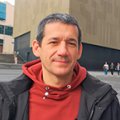
Julen Ibarretxe Uriguen
Industrial Engineer (2001) by the University of the Basque Country (UPV/EHU) and specialised in transformation and properties of polymers (Master by the ENSPM in France). He obtained his PhD in Chemical Sciences by the Catholic University of Leuven (KUL, Belgium) in 2010. He is an Associate Professor in the Department of Applied Physics at the School of Engineering of Bilbao, UPV/EHU, since 2019. He teaches Sustainability Criteria and Life Cycle Analysis in the Master in Research in Energy Efficiency and Sustainability in Industry, Transport, Building and Urban Planning of the UPV/EHU. His main line of research is the development and characterisation of new thermoplastic matrix composite materials, especially biocomposites.

Maider Iturrondobeitia Ellacuria
Chemical Engineer (2006) by the University of the Basque Country (UPV/EHU. She obtained PhD degree in Material science and technology in 2014. She is Associate Professor at the Department of Graphic Design and Engineering Projects of the School of Engineering in Bilbao, University of the Basque Country (UPV/EHU) since 2015. Maider is specialised in bioplastic technology and her research is dedicated to the design of new biobased and lightweight materials for engineering applications. She lectures Life Cycle Assessment (LCA) methods in Master's Degree 'Circular Economy: Business Application' and ‘European Master in Project Management’ of the University of the Basque Country. LCA methodologies are also included in her research work pursuing a reduction of environmental impacts.

Erlantz Lizundia Fernandez
Erlantz Lizundia is Associate Professor at the School of Engineering in Bilbao, University of the Basque Country (UPV/EHU). He received his PhD in Advanced Materials Engineering in 2011 at the UPV/EHU. Erlantz joined the University of British Columbia (Canada) and ETH Zurich (Switzerland) in 2016 and 2018 as a visiting scientist. His work aims to develop environmentally sustainable materials and technologies based on renewable and biodegradable materials such as cellulose, chitin or lignin, using green chemistry, biomimetic, bioeconomy, and circular economy approaches. Erlantz also works on the eco-design of batteries and their recycling, polymer upcycling, or biopolymer valorization through life cycle assessment (LCA).

Ana Mezo Carro
Graduated in Chemistry from the University of the Basque Country and BSc (Hons) in Applied Chemistry from Strathclyde University. Ana’s whole professional career has been at Ihobe, which she joined in 1992. She was initially involved in research, tasked with developing PCB and HCH destruction processes (from laboratory to industrial scales). She was subsequently involved in designing and developing tools, instruments and support services aimed at facilitating the environmental improvement of Basque industry.
Rikardo Minguez Gabiña
University of the Basque Country (UPV/EHU)
Industrial Engineer specialized in Mechanical engineering (1995) by the Faculty of Engineering in Bilbao. He works at the Department of Graphic Design and Engineering Projects since 1998. He was recognized as Full Professor since 2019. Head of the Department of Graphic Design and Engineering Projects since 2016. Chair of the board of studies of the Master's Degree 'Circular Economy: Business Application' of the University of the Basque Country. He joined Laval University in Québec in 2005 as a visiting scientist. He works in the Product Design Laboratory since its creation in 2005, and in the Life Cycle Thinking Group. His current research focuses on Product Life Cycle Assessment, Ecodesign and Circular Economy.
Registration fees
If the microcredential has already started there will be no refund of the enrolment fee.
| Registration | Until 03-05-2026 |
|---|---|
| 72,68 EUR |
| Insurance | Until 03-05-2026 |
|---|---|
| 4,00 EUR |
Venue
Bilbao School of Engineering - 1st building - UPV/EHU
Plaza Ingeniero Torres Quevedo, n. 1. 48013 - Bilbao
Bizkaia
Bilbao School of Engineering - 1st building - UPV/EHU
Plaza Ingeniero Torres Quevedo, n. 1. 48013 - Bilbao
Bizkaia
Sustainable development goals
Agenda 2030 is the new international development agenda approved in September 2015 by the United Nations. This agenda aims to be an instrument to favour sustainable human development all over the planet, and its main pillars are the eradication of poverty, a reduction in equality and vulnerability and fostering sustainability. It is a unique opportunity to transform the world up to 2030 and guarantee human rights for all.
9 - Industry, innovation and infrastructure
Build resilient infrastructures, promote inclusive and sustainable industrialisation and foster innovation. Key issues: reliable, sustainable, resilient and quality infrastructures, inclusive and sustainable industrialisation, modernisation, clean and environmentally rational industrial technologies and processes, scientific research and improvement of technological capabilities, universal access to ICTs.
More information
12 - Responsible consumption and production
Guarantee sustainable modalities of consumption and production. Key issues: sustainable management and efficient use of natural resources, reduction of chemical particles released to the atmosphere, water and soils, reduction of waste products, recycling, reuse and reduction, sustainable practices, sustainable public procurement, sustainable lifestyles, rationalisation of inefficient subsidies for fossil fuels.
More information
Other courses that might be of your interest...
Actualmente no hay cursos disponibles.